There’s a lot of talk right now about Over-The-Top (OTT) and Connected TV (CTV), but they’re often confused for one another or the terms are used interchangeably. While they are related, it’s important to know the difference between the two. CTV includes Smart TVs, Rokus, Apple TVs, Amazon Fire Stick, gaming consules, and more. OTT is video content that is served through those connected devices. In short, CTV = device; OTT = video ad.

With OTT, you have the opportunity to reach engaged consumers in a new way by serving video ads before or within streamed content on these connected devices. 60% of U.S. households own a connected device – this technology connects and reveals a more complete picture with the customer at the center. This doesn’t mean that traditional TV is being replaced, but with connected devices, it’s becoming easier to watch both live TV and on-demand video.

While the digital industry continues to evolve, it’s safe to say that OTT is here to stay. Think of it as the next level for TV advertising. The audience is diverse and not limited to tech-savvy millennials, and there are more targeting options than you may have with traditional TV. You can also track OTT in more detail – detailed analytics provide a full look at how many people saw your ad and how many viewed it in its entirety.

OTT is an impression-based product; you’re paying for the number of times your ad is served to a consumer, instead of how you would pay for a traditional TV commercial. Performance is also tracked in real time, allowing us to optimize as the campaign progresses. Over 1/3 of CTV visits are over an hour long, and viewers (on average) complete 98% of video ads*.

We’re living in a digital-first world. It’s important to know where your audience is and how they’re consuming media. OTT combines the power of digital advertising with the content of traditional TV, creating a compelling environment for viewers to engage with your message.

*AdWeek.com

A phone call is the number one conversion many businesses want from their prospects. But, when they do call you, does someone answer the phone? And when your staff does speak to prospects, are they asking the right questions to qualify them and move them toward a purchase? Here are a few call handling best practices every business should follow.

1. Hello!

The simplest answer is often the right one. Simply answer the phone when it rings, and you’re already ahead of the game. But too often, phones go unanswered, letting them ring and ring. Or, they send calls straight to voicemail. And let’s be honest – how often do you really check those messages and return calls? The truth is, if you don’t return a call within the hour, the chances you ever will drop by 10x – which probably means a lost lead.

So, don’t be that business. Want to get more phone leads? Designate someone to answer your phones during business hours. And if you absolutely can’t, check your messages within an hour and call back any prospects. You might be amazed at how many of them will be impressed by your quick follow up.

2. Where Are You Located?

This is a question many business overlook, but one that’s important nonetheless. For local service businesses, knowing whether a prospective customer is within their service area is important for knowing if they’re a good lead. For instance, if a prospect is looking for a weekly lawn service, but they are 20 miles away, it may not be worth it for you to take them on as a client. Or, if the caller is looking for a plumber in Peoria, but mistakenly called one in Rockford, it’s important to know up front so you’re not wasting yours or the caller’s time.

Asking your prospects’ location could also provide key insights into your marketing efforts. For service businesses, maybe you’re getting too many calls from outside your target location, which may mean you need to adjust your advertising’s geo-targeting or locally-optimize your website. Or, if you have a local shop and find more people are calling you form the next town over, but you’re not advertising there, it might be a good idea to start, which could bring in even more leads and customers.

3. How Did You Hear About Us?

If you don’t have a way to automatically track the sources of your marketing efforts, a good start is to ask prospects how they heard about your business. Was it from your website’s organic search link? A paid advertisement? Once you know, have a way to record the marketing sources so you can evaluate their effectiveness over time. If you are paying money for a newspaper ad, but all your prospects are finding you online, it may be time to reallocate some of your marketing budget to whatever’s the most effective at bringing you leads.

4. What’s Your Email Address?

If you don’t have an email marketing or lead nurturing system in place, it’s time to get one. In fact, 91% of U.S. consumers use email on a daily basis. But, you can’t send emails to anyone if you don’t first collect their email address. If your caller isn’t ready to buy from you, following up with marketing emails like coupons, tips, customer testimonials, and more can help convince them to work with you so you can close the sale. And if they do buy from you, you can use emails to remind them of which review sites you’re on so they’re more likely to leave you a positive review. Or, use a follow up email to tell them about your referral or customer loyalty programs so they tell others about you and buy from you again.

5. How Soon Are You Looking to Buy?

If your lead isn’t ready to buy right away, asking prospects this simple question will help you determine what stage of their buying journey they are in. Making note of this stage is key to knowing how quickly and how often to follow up with them – as well as what method might be most effective. For short-term or active leads, following up immediately with a thank you email and within a few days with a phone call might impress them and help you get the sale. For long-term leads, use lead nurturing emails to remind them of what you have to offer, but don’t be afraid to stay in touch over the phone – being proactive may be what it takes to turn them into a new customer.

We are now a year into Facebook’s major News Feed re-focus, which aimed to put more emphasis on personal engagement, while conversely reducing Page post reach. And definitely, the impacts of that change have been felt – while organic Page reach has been in decline for some years, most businesses reported significant declines in Facebook referral traffic over 2018. While one solution might be to give up Facebook, the network’s size and potential reach make it worth trying to find a way to get it right.

But getting it right is the real trick – what works best for maximizing Facebook performance in 2019? That’s the key question behind BuzzSumo’s latest report – the team from BuzzSumo analyzed 777 million Page posts from 2018 in order to determine the optimal post length, post type and posting times, among other factors, that can help boost your on-platform performance.

Here’s an overview of the key findings.

1. Video is the best performing post type

In what will come as no surprise to anyone who’s been paying attention to Facebook trends over the past five years, video remains the best performing post type on the platform, generating some 59% more engagement than other post types.

If you want to win at Facebook in 2019, you need to be looking into video – in fact, Facebook marketing expert Mari Smith advises that brands should be looking at a mix of 70% video posts, 20% image posts and 10% link posts.

Video remains a key point of emphasis for Facebook, and as it continues to push it’s dedicated ‘Watch’ video platform, you can expect that to continue. The Social Network hasn’t wavered from its video commitment since 2014, when CEO Mark Zuckerberg proclaimed that the platform would be “mostly video” within five years. That would put us into right now, where the stats above show that Zuckerberg was likely not far off in his prediction.

If you want to win at Facebook, video is where you need to be looking. There are more and more options on this front, more ways than ever to create video content. It’s worth exploring what you can do in this regard.

2. Evenings are the best times post

This is always a difficult one to advise on, as, in many ways, it will be relative to your specific audience.

As noted by BuzzSumo: “Every target audience is different, and therefore these global numbers may not work for you. However, it doesn’t hurt to look at them and use them as a starting point if you have no other data.” If you’re looking to test posting times, BuzzSumo’s data suggests that evenings see the most engagement.

There are likely various reasons for this – less competition in feeds (as most businesses are posting during the day), users more active after work, users more receptive as they look for a break from the day’s stress. Various studies have shown that times outside of daily work hours perform best. This is not prescriptive, it won’t apply to all Pages, but if you’re looking to experiment, it may be a good place to start.

3. Weekends see the most engagement

Similar to the best times data, where times outside of business hours see better response, BuzzSumo’s analysis shows that weekends also perform better in regards to Page engagement.

Again, this is not definitive, it likely won’t apply to all businesses, but the reduced competition in feeds, along with users having more free time, leads to more engagement with Page content.

You also, of course, need to factor in your audience. If your audience is global, then these days and times will vary, region-by-region. Depending on who you’re trying to reach, you need to consider how and when they’re likely to be online, and when they’re free to be browsing on Facebook, and factor that into your experiments.

4. Shorter posts perform better

BuzzSumo’s data also suggests that shorter descriptions produce better results on The Social Network.

Various reports have found similar in the past – the numbers suggest that you’re likely better off keeping your post descriptions as short as possible, and letting the post itself do the majority of the talking.

Again, this will differ – make sure you experiment with each element and see what results you get. You should also give each test some time – if you try short posts a couple of times and see no result, that might not be enough to come to a definitive conclusion. You should come up with a defined testing period – a few weeks or a month, so you have a good test pool to compare, then use that as your basis.

Using the data here you may be able to boost your Facebook performance in 2019.

Originally published by Andrew Hutchinson for SocialMediaToday.com.
When someone is searching for your business, you want to make sure they can find you. One of the best ways to do this is by making sure that your information is accurate and up-to-date online, anywhere where they could be searching. Managing your local listings is a crucial step to making sure that your prospects can find you, but where do you start?

Here are five tips to make local listings management more manageable.

1. Get Your Business on the “Big Hitters”

There are more than 150 relevant business listing services across the web, and new ones crop up all of the time. If you are managing your listings yourself, that number seems impossible. But the good news is, you can focus your efforts on a handful of sites and still have a big impact so long as you choose the right ones. First, you will want to manage and update your listings on the “big hitters.” Start with Google My Business, Bing, Apple Maps, and Yelp. Then, you may want to choose some industry-specific listings. One way to narrow it down to the listings that may be most important to you is to perform searches for your business name and keywords for your top services to see what listings come up in the search results. This accomplishes two things – first, it helps you understand where you may already be listed online. And second, it shows you what directory sites rank organically in your area for the services you provide.

2. Stay Consistent

The fact is, mismanaged or inaccurate listings can cost you business. To that end, one of the simplest ways to prevent this is to maintain consistency across your listings. Make sure your business name is spelled and capitalized the same across all listings. If it’s listed on Google as “Laundromat,” don’t list it on Yelp as “The Laundromat.” Make sure you include the same information across all listings when available, including the same website information, the same phone number, the same address. Be sure to utilize the same pictures and the same branding where applicable. This will help make sure that prospects have an easier time finding you online.

3. Check Your Map Listing

A recent study showed that 50% of local searches lead to in-store visits within one day. Before visiting a business for the first time, people frequently search for your listing within map apps on their mobile device. It makes it simple for them to locate you based on their current location. So making sure your map listing has the correct information is paramount to ensure that prospects can find you. But this is about more than checking your address. Locate your map listing and ask for directions yourself. Make sure that the directions take you right to your front door. While more often than not Google Maps or Apple Maps will get it right, on occasion the map pin will be located on a different side of the building, or across the street, from where you are actually located. If you do find that to be the case, you can update your map pin as long as you’ve claimed your listing.

4. Make Sure You’re Not Seeing Double

If your business has changed names or moved, you will want to perform searches to make sure there are no duplicate listings. Duplicate listings can make it difficult for prospects to find you, and make them question which listing is the correct one. It can even hurt your local search ranking. Duplicate listings can happen for many reasons, depending on where the information is coming from. The best way to find them is to go look for them. Start with the more prominent listings listed earlier, and then check all of the local listings important to your business. This particular fix is important, but know that it can be time-consuming to go through the process yourself.

5. Keeping Up with Multiple Locations

This next tip applies to multi-location businesses and franchise businesses that have the same name and branding. Without exception, you will want each unique location to have its own listing. Consistency still applies here – but at a grander scale. You will want to make sure there is consistency in naming (except in cases where different locations may offer different services). You will also want to make sure that the correct phone number and website corresponds with the correct location. Also, keep in mind that rules may differ depending on your business type – for example: healthcare – so do your research first. Managing your local listings can be a time-consuming but worthwhile endeavor because of the benefit to your online presence. It can also be a challenging process, so give us a call if you have doubts. We’re here to help!

Like it or not, the holiday season is approaching fast! Is your business prepared? Take a look at a few of our tips to help you have a successful holiday season.

Make sure your local listings are up-to-date

Local listings are online resources that contain basic information about your business. In today’s mobile-friendly world, it’s important to make sure your local listings are accurate and updated regularly because local searchers are using this information to find you both online and at your physical location. Having incorrect information on listing sites can be detrimental to your business, especially when customers are spending time looking up your business’s directories for address or phone numbers. If your listings are showing up in search results with incorrect information, we suggest you audit local listing sites for your business name across the web and make corrections where it’s necessary.

Make sure your website is mobile-friendly

Keep in mind that last year 53% of people who shopped online used a smartphone or tablet. With that said, you want to make sure your site is optimized for mobile. Currently, Google displays a tag next to websites that aren’t mobile-friendly when users search on mobile, and research shows 72% of consumers want mobile-friendly websites. To avoid deterring people from viewing your site this holiday season, make sure your site is optimized for mobile.

Keep your social media accounts active

We know the holidays are extremely busy for business owners, and keeping your social media accounts active may be the last thing on your mind, but social media is an effective and important way to communicate with your customers during this season. Planning and scheduling out your posts will be key for actively keeping your business’s social profiles afloat during the busiest time of year. Keeping your platforms active will help boost engagement, allowing you to build strong relationships and brand presence.

Thank your customers

It’s always nice to thank your customers, and the holidays are the perfect time to do so. Whether with thank you cards or offers and promotions, you want your customers to feel appreciated and keep your business top-of-mind when they’re making their purchasing decisions. For example, about 44% of consumers made one purchase last year based on a promotional email they received. Giving your customers promotions, whether it’s through emails or social media, is a great reason to influence them to shop with you this holiday season. Enjoy the holiday season!

So whoop-de-do and hickory dock, here’s some marketing ideas that rock! All kidding aside, it seems that every marketing article this time of year is geared toward retailers. While retail is indeed the primary target for the holidays, that doesn’t mean they’re the only ones who can – and should – get in on the holiday mood!

Offer a gift certificate or special offer.

A holiday discount can entice hesitant prospects to jump in. A limited time deal helps the immediacy: now is the time to act, because they won’t get a better deal all year.

Donate to charity and/or participate in local events around the community.

This is a great way to highlight what your company stands for, as well as building camaraderie in the community. It also reinforces to existing customers why they should continue to do business with you.

Host a holiday event for customers and prospects.

Taking time during the holidays is a great way to thank your existing customers and get in front of their friends and families. An event gives you the opportunity to engage with prospects to help improve your client list.

Send a handwritten card.

In a world of email and junk mail, set your business apart by sending a handwritten note of appreciation. This is an easy and effective way to stay in front of your existing customers during the busy holiday season.

Don’t let retailers have all the fun this season – your business can get in the holiday spirit, too! Enjoy the season and spread some cheer!

We walk and drive around with our smartphones all day long, and most of us are usually within three feet of our phones 24/7. But, did you know that same amazing device that allows us to order a ride home via Uber or buy things on Amazon also provides a marketing opportunity to gain the attention of potential customers as they move closer to your business? From a marketing standpoint, it is one of the most hyperlocal targeting strategies you can use. This strategy is called geofencing. So what is geofencing and why should you care about it?

How Does Geofencing Work?

Each mobile device is similar to a tracking device – using GPS, Wi-Fi, and radio frequency identification (RFID) to give off its location. Geofencing is used to send out a beacon from a desired market area to connect and communicate with smartphone users via SMS messaging, mobile ads, or in mobile apps. This geographic fence, hence its clever name, dictates the area the business owner is trying to influence and can target areas as small as a business address with messages for potential customers within that geofence.

What is Addressable Geofencing?

Addressable geofencing works by targeting consumers within specific households. Home addresses are fenced, and all devices within that fence are targeted. It also can target any devices that enter that household – for example, if they are hosting guests. The client must provide the address list to us, but we have a match rate of 90% or higher.

How Geofencing Could Work for You

Geofencing is helpful for a number of businesses in a wide range of industries. Here are a few examples of how geofencing could work:

– Restaurants: Typically there are shifts or certain nights that are slower than others for all restaurants. With geofencing, you can create and test multiple incentive ads, target competitors’ areas, or even target office buildings nearby to broadcast your information to local potential customers. For example, if your restaurant is usually slower during lunch, you could use geofencing to target a nearby office building with a special lunch offer.
– Car Dealerships: Speaking of targeting competitors, imagine you own a Honda dealership and want to highlight some of your service specials or APR/cash back incentives on your new 2017 models. With geotargeted advertising you could showcase those ads to consumers literally sitting inside competing Honda dealerships, or you could even branch out into competing brands to target a larger pool of potential customers.
– Dentists: Trying to attract new patients? A lot of dental practices use direct mail to blanket entire neighborhoods with new patient postcards looking for consumers interested in a dentist. Imagine a cheaper alternative where you could have multiple messages delivered over the course of the month with different offers or practice branding messaging that grabs their attention. Geofencing advertising could be that solution.

Snapchat is a bit different from other popular social media sites, but provides new opportunities and ways to connect with your customers. With 187 million active daily users and an average use time of 30 minutes per user, it may be worth looking at if Snapchat is a good platform for your business, especially if your target audience includes Millennials – 78% of Adults 18-24 in the U.S. are on Snapchat!
Let’s start with the basics. Just what is Snapchat? It’s a popular mobile app that allows you to send videos or photos, both of which will self-destruct after a few seconds of being viewed. It essentially works as both a messaging platform and a social network. There are a variety of advertising options including Ads, Filters, and more. You also don’t have to have a Snapchat account in order to take advantage of their advertising options. Let’s break down the top ways to use Snapchat for business.


Snapchat Ads


Snap Ads are 10-second videos that drive users to a Call to Action, such as “Book Now,” “Watch,” “Shop Now,” and more. These ads play between stories (a story is a collection of snaps that play in the order they were taken).


Geofilters


Filters are decorative overlays you can add to your pictures. A geofilter is a filter available only in a specific location and/or time frame. Businesses can sponsor geofilters, allowing users to add the filters to pictures they take while at or near the business or event. For example, a gala event may have a special filter that guests can use while at the event.


Lenses


Snapchat offers fun filters – known as lenses – that you can add to your videos and images. Lenses use facial recognition technology to put a user into the image shown. Businesses have the option to sponsor lenses that users can use when taking videos and pictures – for example, allowing users to become Batman in an ad for an upcoming superhero movie. The average user interacts with a brand’s lens for 20 seconds, and often shares images and videos that utilize the lens.


Organic Growth


If you don’t want to spend money on Snapchat just yet, you can always start with growing your business organically. Make sure you keep your story exciting and refreshing. Share different photos from your staff, or maybe create news videos to share the latest happenings at your company.
In conclusion, Snapchat has an impressive variety of advertising options for companies of all sizes. It may not make sense for every industry or every situation, but with increasing growth and popularity, particularly among the younger generation, it’s a new option to consider.

Additional information from:
https://sproutsocial.com/insights/how-to-use-snapchat/
https://digitalmarketinginstitute.com/en-us/blog/a-beginners-guide-to-snapchat-for-business

Writing for the web can be tricky. It’s not just putting a marketing pamphlet out online. It’s also more than just a list of bullet points. Here are some useful tips to keep in mind to make sure you are creating content that is appealing to your readers.


Don’t Just Copy the Print Marketing


One of the most common mistakes is to just copy and paste the marketing materials from company pamphlets onto the website. Writing for the Web needs to be different from writing for print. The way the Web works is different from print and the writing need to reflect that.


Write for Regular Readers, Not the New York Times


It’s not a reflection of how smart your readers are; it’s a fact that the Web is international, and any page you put up is going to be viewed by people with all levels of English knowledge. If you write to a lower level audience, you’ll be sure to keep people interested because they can more readily understand.


Write Articles in an Inverted Pyramid Style


If you think of your content as a pyramid, the broadest coverage of the topic should be listed first. Then move on to more and more specific as you get further into the page. This is useful to your readers, as they can stop reading and move onto something else once you’ve gotten as specific as they need. And the more useful you are to your readers the more they will want to read your content.


Write Content, Not Fluff


Resist the temptation to write in “marketing-speak”. Even if you’re trying to influence your readers to take a specific action, they are less likely to do it if your page doesn’t have relevant content. Provide value in every page you write so that your readers see a reason to stick with you.


Keep Your Pages Short and to the Point


The Web is not a good location to write your novel, especially as one long page. Even a chapter is too long for most Web readers. Keep your content to under 10,000 characters per page. If you need to write an article that’s longer than that, find sub-sections and write each sub-section as a stand-alone page.


Focus on Your Readers, Not on Search Engines


SEO is important, but if your writing is too obviously geared towards search engines you will quickly lose readers. When you write for a keyword phrase, you need to use the phrase enough so that it’s recognized as the topic but not so much that your readers notice. If you have the same phrase repeated in a sentence, that’s too much. More than twice in a paragraph is too much.


Use Lists and Short Paragraphs


Keep the content short. The shorter it is, the more likely your readers will read it.


Use Images to Expand on Your Text


Images can be tempting to sprinkle through pages. But unless you’re a photographer or artist, having random images spread through your documents can be distracting and confusing to your readers. Use images to expand on the text, not just decorate it.
It’s also important to remember that rules can be broken – what works for one company may not work for another. You know your business, and you know your customers. Writing with them in mind will help you attract similar people who are interested in your products and services.

Content originally published by Jennifer Kyrnin on LifeWire

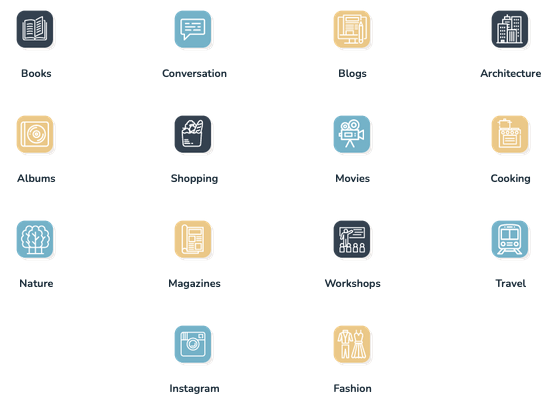
The most inspirational things are often right in front of us. It might be the typography on a book cover, the colors of your favorite music album, or the opening titles in that movie you saw yesterday. To celebrate all those little moments of inspiration, we have compiled a list of our favorite everyday sources of inspiration:

inspiration