We’ve been throwing around these letters for generations (the term “AI” was first used by computer scientist John McCarthy at the Dartmouth Summer Research Project on Artificial Intelligence in 1956), but it’s only in the last decade that the power of AI has become accessible to the masses.

When you’re checking out after making an online purchase and you see the phrase “people also bought” — that’s AI. When you unlock your phone simply by looking at it–that’s AI. When you ask Siri to identify the song that’s playing in the coffee shop or ask Google Maps for directions–that’s AI. But let’s be honest, using AI is one thing, but channeling it for your business is quite another.

That’s where we come in. AI is revolutionizing digital advertising and at Central States Marketing, we’re making sure you’re not left behind. We’ve been using AI to optimize your digital advertising for years. When we set up ad groups, monitor their performance, pause those that aren’t delivering and amplify those that are, we’re using the data analytical power of AI. But as AI tools improve, we’ll be able to improve our ability to segment audiences even more accurately and target them more personally.

AI: The future is here

here’s some advancements we’re looking forward to in 2025:

voice and visual search

AI is improving our ability to interact with consumers in a more intuitive way, making it easier for them to ask question, search options and build a relationship with your brand, thus ensuring you’re top-of-mind when they are ready to act.

hyper personalization

AI is bringing us the ability to better tailor creative to individual preferences and to engage across multiple touchpoints, making the user experience more personal and building even greater brand loyalty.

programmatic advertising

AI is allowing us to segment audiences more precisely and is providing real-time analysis of audience interaction with messaging, further improving campaign performance and ROI.

Technology Enhances. People Inspire.

While AI is undeniably revolutionizing the capabilities of agencies and businesses alike, it’s essential to remember that nothing replaces the power of people. AI, much like a calculator, provides us with faster insights, greater efficiency, and the ability to do more than ever before. But just as a calculator doesn’t solve a problem on its own, AI doesn’t automatically deliver results. It’s up to us—creative strategists, marketers, and decision-makers—to interpret the information, craft compelling narratives, and apply strategic insights. At the heart of every innovative campaign is human ingenuity, ensuring that technology amplifies our potential rather than replacing it.

Helping build brand awareness, running ads to grow your audience, and engaging with your customers. But protecting your accounts is crucial to maintain control over your content, protect your brand, minimize the risk of accidental damage or unauthorized posts, and prevent security issues. Limiting the number of administrators or owners of your social media business pages is a simple way to safeguard your pages.

meta

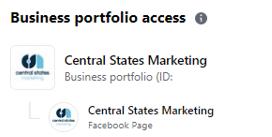
Business Facebook pages should be owned by your Business Portfolio, which connects your Facebook page(s), Instagram account(s), and other assets. However, it is possible to have your page owned by Individuals instead, although this is not best practice. If you’re unsure who owns the page, you can log in to Facebook and go to the business page. Select Settings (left-hand sidebar) and then select Page Setup, then Page Access.

At the top it lists people with Facebook access (individuals). If it is owned by a Business Portfolio Account, it will include an ID (example below).


  • For pages owned by a Business Portfolio, full access details can be found here: https://www.facebook.com/business/help/1101781386943864?helpref=faq_content

  • For pages that are not part of a Business Portfolio, those steps can be found here: https://www.facebook.com/help/289207354498410/?helpref=uf_share 

  • You can also find resources for Privacy Checkups to guide you through privacy and security settings here: Facebook Privacy Checkup | Facebook Help Center 

linkedin

You can assign different roles to team members, such as Super Admin (has complete control over the page including adding/removing other admins, deactivating the page, or editing page information), Content Admin (creates and manages page content, jobs, etc)

It’s recommended to have a minimum of two admins on your page in case one loses access or leaves the organization. Anyone who leaves the company should have their admin access removed as well.

  • To become an admin of a page, you’ll need to request admin access or be granted access by an existing admin. Full guidelines can be found here: https://www.linkedin.com/help/linkedin/answer/a541981. 

tiktok

TikTok Business Center is a central space to manage your business on the platform. When you add members to your business center, you’ll be able to give them permission to safely manage your assets and ad accounts.

Start by logging into your TikTok for Business account. Under the Members tab, click Invite Member and enter the new member’s email address. In the Access Settings section, choose what type of access your new member should have.

An invitation will be sent to the email you provided. If they don’t receive the invitation, click their email address in the Members tab and click Resend.

snapchat

You may have different levels of functionality and access to a business account. Depending on your role, you can invite a member to your organization. New members must be added to the business before they can be assigned to an individual ad account.

Invited members will be notified via email with a unique link to log in. They can then log in using their own Snapchat username and password. If they don’t have a Snapchat account, then they’ll need to create one.

  • Additional steps and information can be found here: https://businesshelp.snapchat.com/s/article/manage-members?language=en_US 

If the mums on your neighbor’s front porch weren’t enough to remind you that autumn has arrived, your dwindling marketing budget won’t let you forget. By October, most of us have spent the majority of our marketing dollars and are looking for ways to maximize what’s left. It can be easy to lose track of our strategic goals as we try to stretch that remaining budget. But just as setting out on a road trip without a map would be irresponsible—expecting to reach your end-of-year goals without a clear strategy can lead to wasted time, money and missed opportunity.

To make sure your fourth quarter marketing budget stays aligned with your marketing goals ask yourself these three questions:

1. Are your end-of-year business objectives clearly defined?

Are you aiming for increased sales, brand awareness or customer loyalty? Sometimes, when we try to accomplish everything—we accomplish nothing. Be specific about your objectives. Prioritize the outcomes that are most important to you and quantify the targets you want to reach by year end. Rather than “I want to see us end the year strong,” try “our goal is to increase revenue by 20% in Q4.”

2. Is your budget being allocated strategically?

Analyze the ROI from your marketing efforts during the first part of the year. Make sure you know which efforts performed the best and allocate your marketing dollars to those channels. And make sure those channels are laser-focused on the targets you have prioritized for Q4. Obviously, keep an eye on emerging trends and opportunities, but don’t get distracted by shiny promises along the way without sufficient evidence to support a change in direction.

3. Are you tracking and measuring performance?

Once you’ve established the KPIs that align with your goals, make sure you track them! Monitoring conversion rates, social media engagement, website traffic and other key performance indicators will help you know when you need to adjust your strategy or amplify your efforts. With diligent tracking you can move resources away from less-than-successful channels and toward strategies that are delivering results!

Business-to-Business (B2B) is the space where one business sells products or services to another business, instead of to individual consumers. B2B tends to be more complex, involving heavier research, more needs-based purchasing, and tighter parameters. Like business to consumer marketing, B2B marketing includes many types of content and can take place across online or offline channels. But there are some key differences not only in the marketing, but in the customer journey along those paths.

Customers today expect seamless, personalized experiences across every channel and in every stage of the buying cycle. More often than not, B2B purchases are an ongoing relationship, so the decisions are much more significant. The average B2B customer journey stretches over 6 months (192 days) from the first touch to closed deal. For more complex ventures, the process can take over 12 months! With such a long time span, it’s important to track the entire progression so you can set accurate objectives and timelines.

Large companies – those with 250+ employees – have a customer journey length of approx. 242 days. In comparison, smaller companies, or those with less than 50 employees, take an average of 147 days. Larger businesses may need more time for nurturing and building those relationships to get the closed deal.

With B2B, there are more stakeholders involved

A 2024 study showed that an average of 6.3 stakeholders are involved in the buying journey. End-users are not always the ones with control over the budget or procurement, so it’s crucial to tailor your activities not only to the end user but also those other stakeholders involved such as finance teams.

There are an average of 62.4 touches across at least three channels before a B2B deal is closed. Cross-channel retargeting campaigns, paid and organic channels, and alignment between Marketing and Sales can keep a cohesive, omnipresent message across all those touch points to stay top of mind.

While we here at CSM are all about living in the moment (we’ve had our fair share of popsicles and pool time in the last few months) we feel it’s important to remember that the fourth quarter will be here faster than you can say “CANNONBALL!”

Planning ahead for the fourth quarter is ALWAYS critical

Consumers spend more during this time of year than any other, making it crucial that you have a solid marketing strategy in place well in advance of the holidays. But this year, with an election in November, the importance of planning ahead is especially important. Elections can greatly influence consumer behavior and they can also impact the availability and cost of both traditional and digital media. Placing your media buys early can help ensure that you get the best price and the best placements for your marketing message.

But favorable pricing and well-placed spots are only part of a winning strategy. Now is the time to refine your value proposition and make sure you are communicating it in a creative way that will connect with consumers. What sets you apart? Are you clearly communicating the benefits and unique selling points of your brand to your target audience? Could your visuals be more engaging? Could your copy be more persuasive? Are you consistently branding across all channels so that every ad placement builds name recognition and recall?

Don’t let poor planning cause you to miss this opportunity

As the election gets closer, consumers are more and more likely to be “tuned in” to ALL media sources. And many brands will be vying for that attention this 4th quarter. It’s a great opportunity to get your message out in front of a larger audience than usual. But when the airwaves are this crowded, the competition is fierce. Messages that are stale and creative that doesn’t immediately inspire will be drowned out and precious marketing dollars will be wasted.

To quote one of our favorite presidents, Abraham Lincoln…

“Give me six hours to cut down a tree and I will spend the first four sharpening the ax.” No matter your fourth quarter focus—maximizing sales and revenue, building brand awareness, or generating leads and conversions, the time to prepare is now and Central States Marketing is here to help you sharpen the ax!

It’s no secret that digital media (such as search, display, and online video) has increased in popularity over the last decade or so. While digital media is an excellent marketing tool, it doesn’t mean that tried and true methods of traditional media (like radio, TV, print, and outdoor billboards) should be left behind. Using a combination of both digital and traditional is the most effective method of marketing and is far more useful than using either on its own.

When combined, the benefits of both plans help complement the other. Traditional marketing tactics have proven high success rates. Digital media can provide more customer interaction and detailed targeting capabilities. Each technique appeals to different people and audiences, so a blend of the two provides an excellent way to reach your potential customers. Most people consume various types of media throughout their day, so diversifying your marketing dollars can help expand overall reach.

For example, television and print ads are helpful in spreading information and can also incorporate a message to look for more information on a website (a ‘call to action’ of sorts). Coca-Cola is an example of a company who has done a great job of incorporating online with traditional. Their “Share a Coke” campaign allowed customers to find their names and names of friends on bottle labels (a more traditional method). These labels included hashtags, encouraging customers to share pictures and tag friends on social media (an online method). Coca-Cola was able to actively engage customers through this strategy, which combined aspects of both traditional and digital.

Additionally, using both traditional and digital marketing methods allows your message to be spread across many different channels. Depending on the target audience, some techniques may work better than others. McDonalds uses multiple channels to their advantage, utilizing billboard and print ads to attract the attention of potential customers, but also having a strong online presence. This allows them to reach customers they may not have if they had stuck to only one channel.

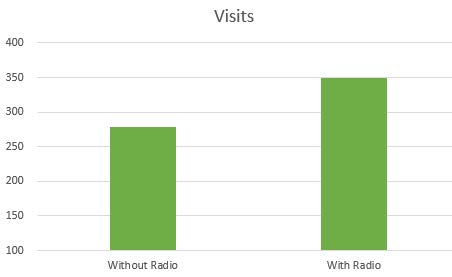
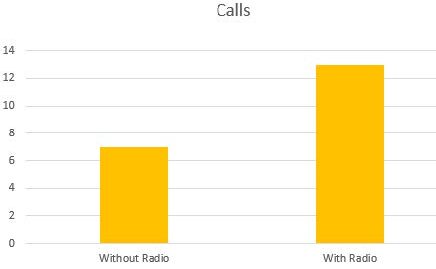
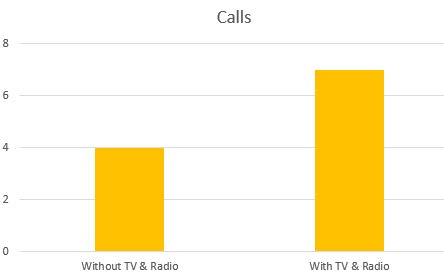
Running traditional media can also help boost your digital marketing efforts. For example, a regional healthcare facility ran a campaign which included paid search and broadcast radio. When the radio commercials were running, the digital campaign saw an increase of 13.38% in visits/clicks, and an 85.71% increase in calls.

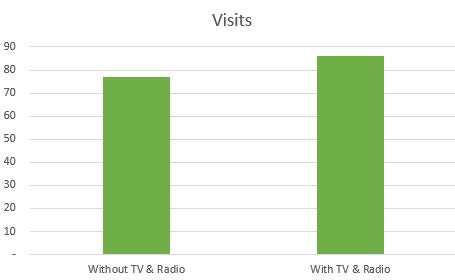
In another example, a local HVAC company ran a digital marketing campaign (paid search, online display and video) in conjunction with a traditional media campaign of broadcast radio and TV. During the time traditional media was running, the paid search campaign had an 11.69% increase in visits/clicks and a 75% increase in calls.

So you just started a new online ad campaign – paid search, display, video, or social media – and you’re understandably excited! But then you notice that you’re not seeing your ad. Is something wrong with your campaign?

Probably not. It’s not unusual to not see your own ad, for a number of reasons. Let’s take a look at why this might be happening.

Paid Search

Your paid search campaign started and you keep searching for your business name or industry keywords, but your ad isn’t appearing. Why? Search engines are designed with in-depth, algorithm-based rules and preferences to determine intent and what ads to serve – and those algorithms undergo some amount of change almost every day! Since paid search is an auction system with real-time bids, a search that happens now will show different results than a search that happens five minutes from now.

There are many factors that will affect whether an ad will show such as day of the week, time, device type, bid, competitor bid, etc. If you’ve previously searched and your URL has come up organically and you did not click it, or clicked it and closed quickly, the search engines think that you’re not interested in that site so they won’t show it to you in a paid ad.

Additionally, if you do see your ad after searching on it, clicking on it will cost you money (since it’s a pay per click product). If you leave your site right after clicking the ad, the search engines will think your ad is less relevant, which negatively impacts your campaign’s performance. However, seeing your ad and not clicking it also hurts the campaign, because it thinks your ad is less relevant. As tempting as it is, it’s best to refrain from trying to find yourself on paid search.

Display and/or Online Video

The main reason why you may not see your display or video ad is the size of the Real Time Bidding environment. Our ads and videos run across 20+ ad exchanges – that’s thousands of sites and streaming platforms. Think of it like running TV commercials on every single channel at random times throughout the day. Grab a remote and start channel-surfing, and it’s still unlikely to find your ad, even though we know that it is running.

Many of our campaigns use layered targeting to serve your ads to the right audience. Maybe your profile falls outside that target demographic, or you’re not considered in-market for a product or service because you haven’t shown a historical interest in it.

Social Media

Social media uses detailed algorithms to determine what ads to serve to which audience. At the heart of the algorithm is the ad auction, a real-time bidding process that determines which ads will be shown to users and in which order. The platform evaluates eligible ads based on three factors – advertiser bid, estimated action rates, and ad quality and relevance.

Ads are targeted by demographic and geography; however, even users who meet that criteria may not see your ad, depending on their personal details and previous behavior with content. The goal is to match ads with relevant users who are likely to engage with the content and take action (clicking, liking, sharing, etc).

Chances are you know someone who will be wearing a cap and gown this month. Whether it’s a celebration of that sweet milestone of moving from kindergarten to first grade or the commemoration of a hard-earned Ph.D. – graduations stir our emotions and inspire us to think about the future. As it turns out, commencement addresses not only provide advice and vision for those about to receive their diplomas, but can also inspire us onlookers. We thought this would be a good time to share some of our favorite commencement quotes:

“The future belongs to those who believe in the beauty of their dreams.”
– Eleanor Roosevelt, 1940, Valedictorian Speech at Wellesley College

To illustrate, consider Apple’s branding strategy. Their sleek product design, minimalist packaging, and memorable advertising campaigns all contribute to their brand identity of innovation, simplicity, and elegance. Every interaction with Apple products or marketing materials reinforces this image, solidifying their position in consumers’ minds.

In short, a brand is your business and how others perceive it, whereas branding is things you do to manage and influence your brand. To simplify it, think of yourself, for example. You have certain features that make you unique and help people recognize you (your brand). Then, you have a unique personality, values, likes/dislikes, etc. that helps you express yourself to the world (your branding).

Whether you have an existing brand that needs to be refreshed or are just getting started and need help establishing your brand, we’re here to help! Our web design/development and graphic design teams can create a brand that fits your goals, and our strategy and media team are here to help ensure that your branding efforts represent it properly.

“The best way to predict the future is to create it.“
– Peter Drucker, 1994, Claremount Graduate University

Known as the Father of Modern Management, Drucker published his first business book in 1954 and his leadership theories continue to shape business philosophy today. He reminds us of the importance of being pro-active in our organizations, thinking creatively and fostering innovation. By empowering the people in our organizations and collaborating to solve problems and invent solutions, we can create our own personal and organizational success.

“Don’t be afraid to give up the good, to go for the great.”
– John D. Rockefeller (We’re not sure when or where he said it, but we’re positive it has been used in a commencement address at some point.)

Measured in today’s dollars, Rockefeller was the richest man in U.S. history and the first American billionaire—so it’s appropriate for business leaders to consider his advice. We like this quote because we can all relate to how easy it is to stick with the status quo and how hard it can be to try something new—especially when it comes to our marketing practices. If we want to take our organizations to the next level, we have to get out of our comfort zones and take risks—calculated, well-researched risks are always preferable, but don’t ignore those gut feelings that tell you to go for it!

It’s officially Spring! We’ve moved the clocks forward, relegated the snow shovel to the back of the garage, and dusted off the patio furniture. There’s something about this season of renewal that inspires us to clean out the old, get more organized and freshen up our environments. Our grandmas called it Spring Cleaning and you can bet they turned the house upside down, knocking down the cobwebs and sweeping out the dust bunnies. It’s a tradition that can serve us well in the workplace too.

Track your progress

Just like your closet needs an annual purging (we see that unused collection of sweatbands), so do your Marketing Goals and KPIs: Are your existing marketing goals still relevant to your current business objectives? Are you tracking the right Key Performance Indicators (KPIs) to measure progress? Spring cleaning is a great time to refine your goals, ensuring they are SMART (Specific, Measurable, Achievable, Relevant, and Time-bound).

Review marketing materials

Don’t forget the refrigerator! Right after you throw out that mayo from 2022, why notreview Your Marketing Materials to make sure they are up to date. Spring is a great time to refresh your website content, social media posts and email campaigns. Are your visuals still relevant? Hours still accurate? Is your current brand voice represented consistently? Are there channels you are neglecting that have become important to your target audience? Or channels that are “expired” and need to be tossed out like those outdated condiments?

Assess your marketing tools

One of the hidden bonuses of Spring Cleaning is the possibility of finding lost treasures. (You completely forgot about those Starbucks gift cards you tossed into the junk drawer, didn’t you?) Now is a great time to assess your Marketing Tech Stack for tools that are underutilized and could improve efficiency. Did you invest in a work process platform that has the potential to dramatically improve workflow, but you just haven’t fully adopted it? Or maybe your team needs further training on software that you’ve already installed and could be improving performance? Now is a great time to dust off those hidden gems and bring them back to life!

In the realm of marketing, the terms “brand” and “branding” often intertwine – or are even used interchangeably. However, they have distinct meanings and functions. Understanding their difference is pivotal for crafting effective marketing strategies and creating brand loyalty.

A Brand is a set of expectations, memories, stories, and relationships that epitomizes the essence of a company, encompassing its identity, values, and promises. It is not merely a logo or a product; rather, it embodies the emotions and perceptions evoked in consumers’ minds. Nike, for instance, isn’t just about shoes. It symbolizes empowerment, athleticism, and innovation. Brands resonate with consumers on an emotional level, influencing their purchasing decisions and fostering long-term relationships. It should be present in everything your business does. Your brand isn’t within your control – it’s your consumers who dictate its direction.

Branding, on the other hand, is the strategic management to shape and mold the brand’s perception in the eyes of consumers. It’s the deployment of the strategic plan for your brand, including everything from logo design to packaging to advertising campaigns and even customer service interactions. It encompasses both the tangible and intangible elements employed to convey the brand’s message and values effectively. It’s the entire process of creating and managing a name and image that sets your business apart. Effective branding ensures consistency across all touchpoints, reinforcing the brand’s identity and building trust among consumers.

To illustrate, consider Apple’s branding strategy. Their sleek product design, minimalist packaging, and memorable advertising campaigns all contribute to their brand identity of innovation, simplicity, and elegance. Every interaction with Apple products or marketing materials reinforces this image, solidifying their position in consumers’ minds.

In short, a brand is your business and how others perceive it, whereas branding is things you do to manage and influence your brand. To simplify it, think of yourself, for example. You have certain features that make you unique and help people recognize you (your brand). Then, you have a unique personality, values, likes/dislikes, etc. that helps you express yourself to the world (your branding).

Whether you have an existing brand that needs to be refreshed or are just getting started and need help establishing your brand, we’re here to help! Our web design/development and graphic design teams can create a brand that fits your goals, and our strategy and media team are here to help ensure that your branding efforts represent it properly.