Chances are, you’ve heard or read something about AI (Artificial Intelligence) in the last few months. The rapid development of AI is an unprecedented phenomenon, and this technology is becoming more complex and powerful.

AI in Design

Adobe is leaning into AI Design tools, currently in beta mode. This model – Firefly – has a goal of empowering users of all experience levels to generate quality images and text effects. For creators who do not want their content used in model training, a “Do Not Train” tag will be introduced and associated with that content.

AI in Content

In a recent Adobe study, 88% of brands said content demand has at least doubled over the last year; two-thirds of those surveyed expect it to grow 5x over the next two years. This provides AI an opportunity to help create content for blog posts, social media updates, and more.

ChatGPT is an artificial intelligence chatbot, released about six months ago by OpenAI, with a free basic version. Generative tools like this have wriggled into schools, leading administrators to wonder what to do next. Some schools have banned the technology entirely, while others are embracing it as a tool to teach students how to tell the difference between reality and science fiction.

This tool can create text, art, videos and music via natural language processing (NLP). Within the first two months of its release, the platform reached 100 million active users.

However, AI models need training data. When you enter data in, it becomes part of the data collective of that application. The data entered is likely not private to you anymore, so you must consider how you apply this new technology.

AI in Marketing

Why does AI matter for marketing? People have adopted digital in a huge way for nearly aspect of their lives, and many of these new habits and behaviors are sticking. This makes it more difficult to predict a consumer’s next step. Today’s AI breakthroughs become a multiplying force for businesses by empowering them to stay on top of consumer needs and trends.

AI is already in use in much of digital and social advertising, with optimized bids, responsive ads, etc. However, it’s important to still utilize a human touch. To deliver optimal results, it’s critical that human expertise guides the AI and works hand-in-hand with the technology.


The core tenets of Central States Marketing include respect, innovation, teamwork, disruption, and support. When looking at the upcoming year, a few of our team members developed an internal program for employees – Give, Gather, Grow.

The program’s goal is to engage employees with intentional purpose in their routines. With the hectic pace of today’s world, we often are moving quickly and don’t take time to reset and regroup. Your health – mental and physical – affects all you do in life, which will trickle down to your work life.

give

how can we give back to the community? This year, we’ve coordinated donations for various local non-profit organizations.

gather

provides a chance for us to gather together as a group, learn more and get to know each other on a deeper level.

grow

focuses on how we can grow and better ourselves physically and mentally. It provides a way for us to invest in ourselves.

In addition to these core pieces, the program also includes optional incentive-based programs. It’s not a mandatory portion of Give, Gather, Grow, but provides a monetary incentive for us to hold ourselves accountable.

Each quarter, one option is to read a particular book (or listen on Audible), which helps us connect and open dialogue around those books, what we’ve learned, etc. It also shows how we all take away different things from what we hear and read. Additional bonus opportunities include continuing education programs, CPR training, and other activities that contribute to our mental wellness.

Books we’ve read so far this year include:

“Master Your Thinking” (by Thibaut Meurisse) “Stop Overthinking: 23 Techniques to Relieve Stress, Stop Negative Spirals, Declutter Your Mind, and Focus on the Present” (by Nick Trenton)

This has been a great way for our team to invest in ourselves and bond over our activities. Growing together not only makes us all stronger individually, but also as a team. What are some ways you can encourage your team to invest in themselves? You can keep it simple, with something as easy as collecting donations for a shared cause or a team event!

If your company posts social media content every day, that’s 365 pieces of content each year. Multiply that by however many years you’ve been posting, and that’s a lot of content in the archive!

Pieces that performed well should absolutely be reused again!

And there are a whole lot of reasons why.

Who says you need new content? Where’s the rule that every post has to be brand new? Good content is good content, no matter how many times you’ve seen it. I’m pretty sure bands play your favorite songs night after night, and we both know how many times you’ve re-binged The Office or Friends.

Your audience likely hasn’t even seen your content

Small brands tend to hit a 32% reach rate (number of people who’ve seen your post/followers), while brands in the 500k range generally strike a 12% reach rate.

That means somewhere between 68% and 88% of your followers haven’t seen any one post in particular. That post you thought should’ve popped off? Throw it back up.

Think of those content pieces as your “greatest hits”

Proven pieces of content that support the legacy of the brand help touch on a point of familiarity. Take a look through your top 50 posts to see what’s worked, then re-use those top performers every year. Think of it this way – if you go to see Bruce Springsteen, you’re probably going to see “Born to Run.”

Put a “twist” on it

We’re in the heavy hooks era of social. The first few seconds of your video arguably matter more than the content of the video itself. If that TikTok you believed in didn’t perform? That doesn’t mean it’s not the right idea—it means you should consider adjusting your intro. Maybe you needed bigger on-screen text, a human face looking back through the phone, or just a different headline. It’s worth testing again with a different hook.

source: https://www.marketingbrew.com/future-social/stories/2023/02/08/undefined

It’s no understatement to say that the world has changed considerably in the last three years. The same can be said for marketing and consumer trends.

A recent survey of digital marketing campaigns nationwide found that year over year, Click Through Rate and Cost Per Click have both remained relatively stable, but Conversion Rate has decreased significantly, leading to a similar increase in Cost Per Lead.

What’s driving this change?

shopping cart

The largest and smallest increases indicate that inflation is a big driver – 91% of industries saw an increase in Cost Per Lead. Inflation and an uncertain economy are causing consumers to be more conscious of spending – people don’t want to stop spending; they want to save.

Did you know that a consumer needs to encounter a brand an average of 7x before becoming a customer? With so many touchpoints needed, it’s clear that paid search marketing alone isn’t going to cut it. 87% of consumers want brands to provide more consistent experiences across tactics. Brands that use three or more tactics also see a higher conversion rate of 287% on average.

Social media, digital display ads, and pre-roll/streaming video are among the most popular tactics to supplement paid search. A recent survey of small-to-medium-sized businesses (SMBs) showed that the majority expect to increase spending for the following mediums over the next 12 months:

53% expected to increase spending in social media

60% expected to increase spending in digital display ads

61% expected to increase spending in pre roll/streaming video

Data shows that about 25% of people make New Year’s Resolutions, and the majority think they’ll accomplish them.

Even if you don’t keep them, setting resolutions can help you improve in different aspects of your life, as well as increasing hope and optimism. When you seek to do better or be better, you tend to inspire others as well.

win playbook

Notre Dame football coach Lou Holtz may be most famous for coaching his team to nine straight New Year’s Day bowl games. Or maybe you remember him for that undefeated national championship season in 1988.

While several of us at Central States Marketing are big Notre Dame fans, it’s something that Lou did OFF the field that is inspiring us this year. Lou encouraged his players to adopt a W.I.N mentality in their daily lives and we’ve chosen that philosophy as our touch stone for 2023.

What’s Important Now?

W.I.N. is a simple acronym that the famous coach used to remind his players to consider “What’s Important Now.” We can’t think of a better time than the start of a new year to ask ourselves that question—whether in regards to our personal lives or our business strategy. It’s so easy to operate on auto-pilot and move through life without paying attention to the scenery. We train ourselves to get through the day-to-day chaos of this world by developing routines and responses that require little thought. We set the alarm for the same time each day, we order the same coffee, we gather information from the same sources and we do the same promotions year after year because it’s fast and it’s worked in the past.

But it can be life-changing to pause and really take note of what’s happening around us. Lou encouraged his players to ask themselves “What’s Important Now?” at least 35 times a day! For those of us who get through life by multi-tasking and juggling two or three priorities at a time—it can be tough to stop and truly consider what one thing deserves top priority and our full attention at any given moment. But when we are able to slow down and truly focus on what’s important now, we often find that our thoughts are clearer and our responses are more informed and creative.

At CSM we are committed to having a W.I.N mentality in 2023. Won’t you join us? The impact on our health, our relationships and our careers may not get us into a New Year’s Day bowl game, but we believe it will allow us to look back on 2023 as a season of victory!

In the life of every legacy brand, including our own, there comes a day when a tired graphic identity needs a reboot. After 22 years, Central States Media is rebranding as Central States Marketing and we’re excited to finally unveil our new look to the people that matter most—our clients!

We are forever grateful to the clients who believed in us back then and to those who continue to trust us today. Thank you!

Renewed commitment, time-tested values

As we relaunch the CSM brand, we do so with the promise to continue providing the visionary strategy and personal service that you have come to expect from us. We may be growing, but we will never lose sight of our values. We built this agency on trust and transparency, and we remain committed to building long-term, mutually beneficial partnerships with our customers.

Did you know…

– While our midwestern roots run deep, we also serve national and international clients.
– While we DO create and place thousands of media campaigns every year, we also provide strategic direction, market research, and award-winning design services.
– While we have been in business for 22 years, we recreate ourselves daily as we stay ahead of new tools and trends to help grow your business.
– CSM was born in an alcove above Ann’s garage and now we have offices in 3 states from which we run campaigns in five languages in ten different countries.

The importance of graphic design cannot be overemphasized. It adds to identity as well as extends beyond the appearance of a brand. Here are a few trends from 2022 that are expected to continue into future year.

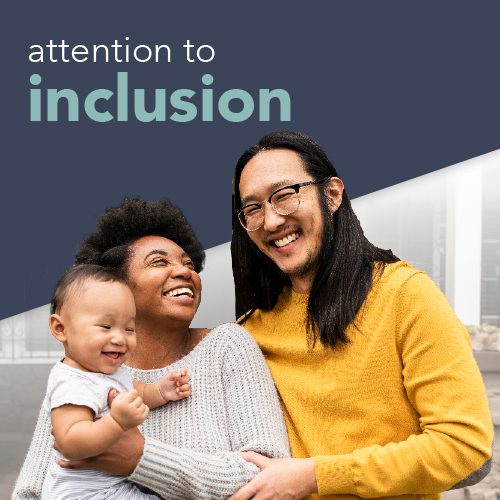
attention to inclusion

family smiling

Diversity is represented in many designs. Reviewed interest in this can be seen in how designers portray diversity while trying to achieve positive changes with colorful illustrations and stock photos, highlighting different cultures, skin color, and beliefs.

geometric shapes

goemetric shapes

Wherever you look, you’ll see designers use such shapes in their work. You can combine them with any image and create a unique mix of unusual details. Apart from the images, you can use shapes to represent data points, display content, and even reflect your brand. Even better, these shapes combined with muted colors create client-friendly text and attractive visual effects.

monochrome effects

lady smiling

Nowadays many graphic designers are experimenting with the creation of images and saturating them with monochrome effects. As a derivation of a two-color trend of 2017, monochrome effects are becoming increasingly popular. Use a monochrome filter and the achievement of an unusual result is guaranteed.

source: https://merehead.com/blog/top-graphic-design-trends-2022/

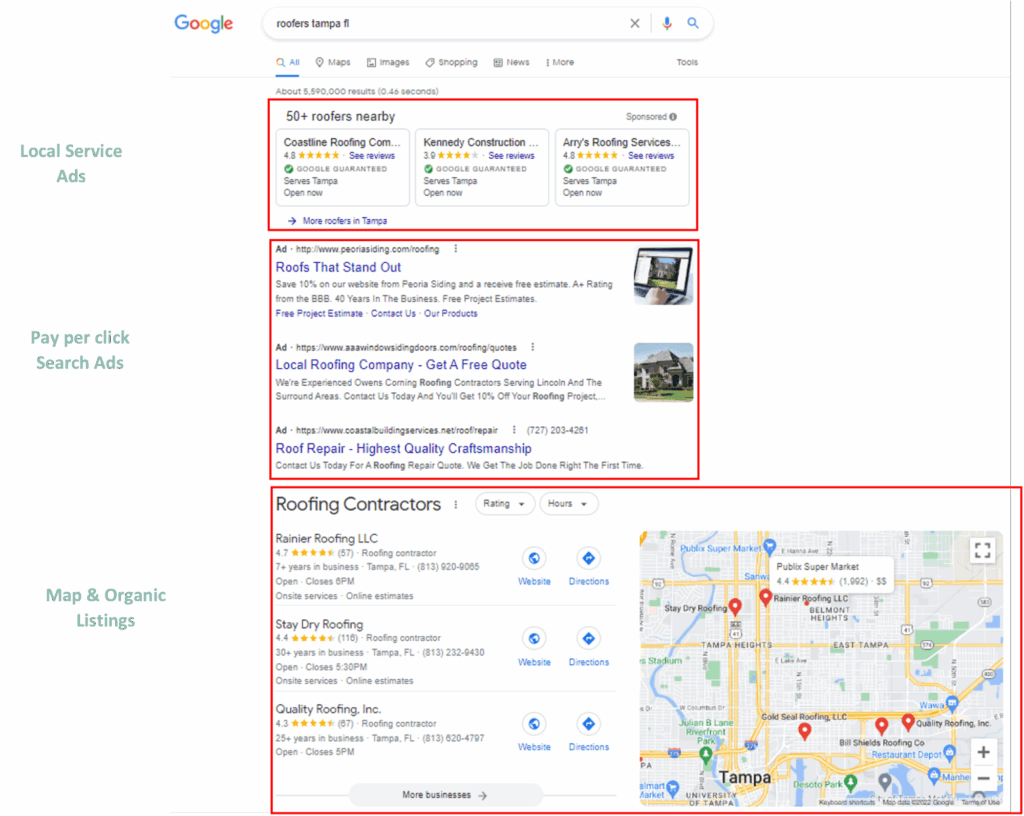
A few years ago, Google started rolling out Local Service Ads (LSAs) to help attract customers to service-based businesses. While the scope of these ads has grown since then, they are still limited to select industries such as home service (electrician, fencing, flooring, HVAC, etc.), lawyers, junk removal, pest control, pet rescue/adoption/boarding/grooming, etc. View Full List

Appear at the Top of Google’s Search Results

LSAs appear at the top of Google’s search results, above both paid and organic listings. The lead provides a “click to call” functionality and operates on a pay-per-lead basis instead of cost per click. They link to a profile of your company with detailed information about your services, address, office hours (if applicable) and other critical information. Through the LSA profile, a user can book an appointment by submitting a form or calling you. The profile page is templated and automated.

Up to 3 LSAs will appear on desktop, 2 on mobile, and only 1 via Google Assistant. Factors affecting position and ranks include proximity to the searcher, average review score and the number of reviews you receive, your responsiveness to customer inquiries and request, whether you have received serious and/or repeated complaints about your business, the bid amount, and more. Placements cannot be guaranteed due to this number of variables.

LSAs are set up under your Google Account, so if we are setting them up on your behalf, we will need access to this account. We will work with you to get access and troubleshoot any potential issues that arise.

Get the Google Guarantee

LSAs require a verification process to gain the “Google Guarantee” checkmark and badge (see screenshot below for a sample of how these ads appear; headshots are only included for select categories). Items needed for verification vary depending on the industry, but can include:

– Owner’s First Name
– Owner’s Last Name
– Total number of professionals
– Year founded
– Verification of the physical address
– A business background check on the company as a whole
– Confirmation that the company has an online rating of 3.0 stars or higher
– Background Screening Process
– Proof of Insurance

different types of ads

A recent national survey of media buyers and ad agencies shows trends toward what type of media businesses are currently drawn to, which tactics are seeing growth and which are remaining stagnant or decreasing.

50%

Purchasing radio, social media, and events/sponsorships. Shown an increased interest in streaming/online video and social media.

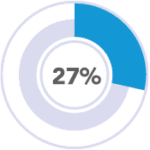
27%

Plans to increase their budget.

25%

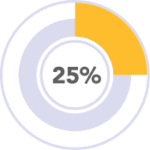
Plans to increase their search marketing.

15%

Plans to increase their streaming video spend.

Of those same same tactics, less than 5% of those surveyed plan to trim or eliminate their budget.

Traditional media such as newspapers are seeing the opposite trend:

– 14% plan to decrease their spending.
– 7% plan to maintain or increase their spending.

Magazines are seeing a similar tract:

– 9% of businesses are planning to decrease their spending.
– 7% are planning to increase their spending.

In a not-surprising find, social media is also on the rise. A whopping 89% of respondents use social media to market their companies, and the average business uses 2 platforms.

facebook

83% of respondents are using Facebook for marketing.

instagram

50% of respondents are using Instagram for marketing.

youtube

28% of respondents are using YouTube for marketing.

8% of respondents are using TikTok for marketing.

this number has doubled since 2021, showing that while usage of short videos is still small, it’s growing quickly.

Where is video placed for marketing attention? Videos are most likely to appear:

– Social media pages (76%)
– Company website (62%)
– Traditional TV commercial, such as network or cable TV (49%)
– YouTube (44%)

*Statistics provided by Borrell Associates

baby boomers (ages 58-76)

Baby boomers were born between 1946 – 1964. This post-war generation grew up in a time of prosperity and economic growth, and they hold the most purchasing power and discretionary income of all the generations. Today, most are empty-nesters that are close to retirement or already retired.

How to reach them: They use traditional media but also tend to use laptops and PCs more often than the younger generations for non-work activities such as browsing or visiting news sites. They’re highly motivated by good deals – 75% are more likely to make a purchase if they have a loyalty discount or coupon – and are very brand loyal. Although they spent most of their lives without modern technology, 86% research products online before purchasing and 82% are active on at least one social media site.

generation x (ages 42-57)

Born between 1965 – 1980, Generation Xers are now juggling homeownership, child care, and peaking careers. They’re busy, and they’re engaged on social media – more than 80% are on multiple social media sites. They are on par with technology adoption and use with millennials. They claim to be the most dedicated to lists while shopping but also confessed to making the most unplanned purchases on their shopping trips.

How to reach them: Gen Xers are a true hybrid when it comes to marketing. They still enjoy a trip in-store shopping, but have also fully embraced online shopping. They love coupons (68% have used coupons they received in the mail), and are more likely to support a service or product that somehow benefits society or the environment.

millennials (ages 26-41)

Slowly outnumbering Baby Boomers, Millennials were born between 1981 – 1996. They began entering the workforce as the economy crashed, and are notoriously soft-hearted and soft-shelled, valuing societal issues far ahead of economics. They are the least frequent in-store shoppers and are most responsive to online shopping, recommendations from family and friends, and are motivated by shopping ease.

How to reach them: Millennials love the next big thing. They rely on reviews a lot, seeking peer input on decisions, so make sure your online reviews and customer experiences are up to par. They use social media a lot – 68% are more likely to ‘check in’ to a business on social media if they’d receive a discount or coupon. They enjoy brand loyalty programs – 77% already do or are willing to participate in rewards and loyalty programs. And contrary to popular belief, millennials listen to a good amount of radio – 93% report listening to a total of around 11 hours per week!

generation z (ages 10-25)

Gen Z was born 1997 – 2012 and are currently the most diverse and most tech-savvy generation. While many of them are still young, they already hold a significant amount of spending power. They value financial stability above all else due to economic uncertainty stemming from the Great Recession, and are responsible spenders.

How to reach them: Gen Z relies more on reviews, recommendations and social media than any other generation. They engage best with brands that are environmentally and socially responsible, and engage with them as individuals, offering personalized products and experiences. They’re less likely to sign up for loyalty programs. A whopping 81% prefer to shop in stores instead of online for the social aspect of it, and 90% check with their parents on a product or services’ affordability before making a decision.