Our team thrives on fun projects, especially those that revolve around good times, friends, and snacks. Check out our latest creation to celebrate the big game!
Congratulations, you just survived the longest month of the year. OK, it’s not actually longer than the other six months that also happen to have 31 days, but somehow it always feels like the dark and frigid days of January might never end. Coming off the high of December with all of its parties and celebrations, January feels like nothing but work. And interestingly enough, there’s a psychological reason why the month seems to drag on endlessly. It’s called the Dopamine Clock Hypothesis.
According to the National Institute for Health, “increased dopamine release speeds up an animal’s subjective sense of time—its internal clock.” Or, to put it in layman’s terms, time flies when you’re having fun. And conversely, time slows down when you’re bored. (Need proof—have you ever watched the clock when you’re sitting at the DMV?) Many of us, in an effort to recover from the holidays, intentionally slow down our social activity (fun) in January. We go into hibernation mode, we sleep more, we go out less, and we may even jump on the Dry January bandwagon. Not to say living in our pajamas and bingeing Netflix isn’t fun, but it does tend to decrease our dopamine levels and slow down our internal clocks.
There’s nothing wrong with a dry and cozy January, but now that we understand the dopamine clock hypothesis, what can we do to make sure February isn’t a Groundhog Day repeat?
Plan an outing or two
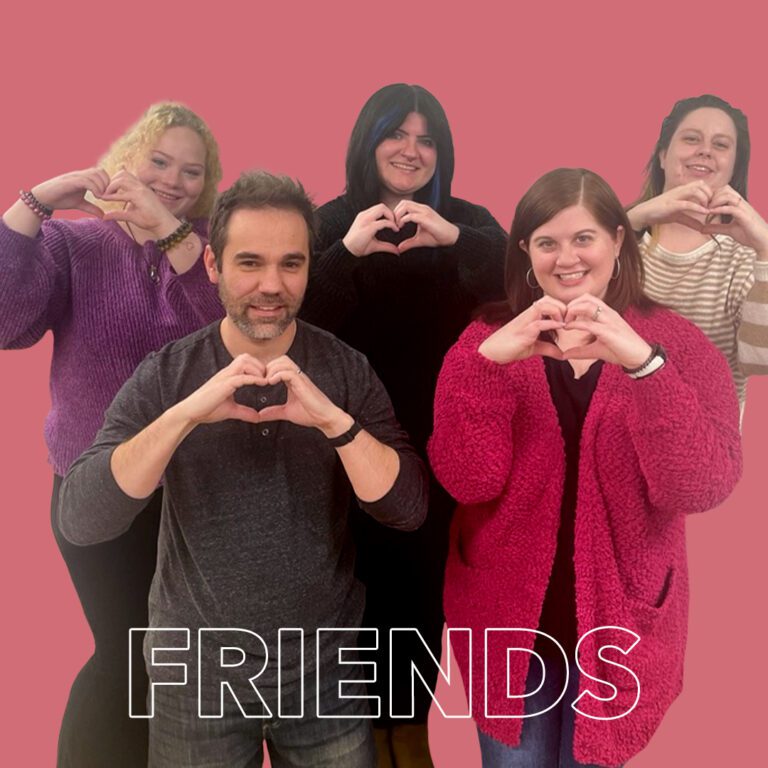
How about Galentine’s Day with your girlfriends? Or a team event to celebrate one of the many national holidays in February? Make it a point to crawl out of your self-imposed cave and schedule some FUN and you’ll do yourself and your colleagues a favor. Here are some idea starters….
Here are some idea starters…. Feb. 9 – National Pizza Day Feb. 11 – National Get Out Your Guitar Day Feb. 13 – Galentine’s Day Feb. 14 – Valentine’s Day Feb. 17 – President’s Day Feb. 20 – National Love Your Pet Day Feb. 24 – National Tortilla Chip Day
Get some sunlight and fresh air
We started January with only 9 hours and 11 minutes of daylight and on February 1 we’re up to a whopping 10 hours between sunrise and sunset! Every day we’re gaining two and a half minutes of sunshine and by the end of the month, we’ll be up to 11 hours and 14 minutes of glorious daylight. Get out there, bundle up and call your customers while you’re on a walk. Better yet, invite your customers to take a walk with you! Can’t get away? Then open your windows and let the fresh air in. Scientists say that opening your windows for as little as five minutes a day can improve the air quality in your home or office, make you feel more alert, reduce toxins and help prevent illness.

Actively dream about the future
February is a great time to refocus on your personal and work goals. Research shows that 43 percent of people have given up on their New Year’s resolutions by the end of January. Commit to being in the 57 percent who are still going strong! Whether it’s a fitness goal, a sales target or a trip you’ve resolved to take in 2024, double down in February!
Buy something new to wear to the gym to keep yourself motivated, reward your team for the incremental progress they’ve made by taking them out to lunch, build out that vacation spreadsheet (you know you have one) by adding restaurants you want to visit, and sites you don’t want to miss. Maybe even change the screensaver on your phone to a picture of that pristine beach you plan to enjoy come June. “Imagining good things ahead of us makes us feel better in the current moment,” says psychologist Simon A. Rego. “It can increase motivation, optimism, patience and decrease irritability.”
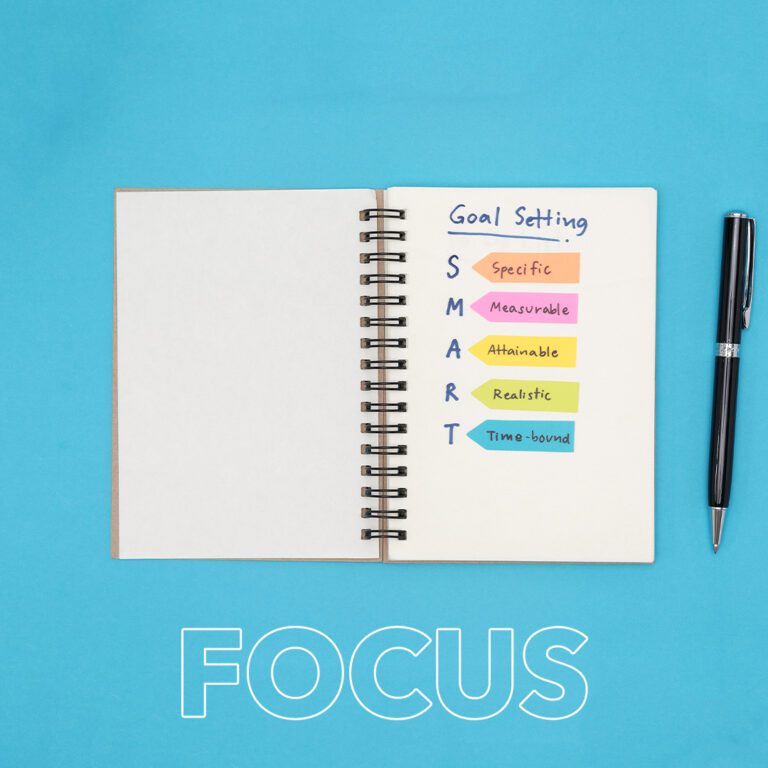
Friends, Fresh Air and Focus—tried and true ways to rev up the dopamine clock and power through winter. Bring it on February—we’ll see you on the other side of Leap Day!
In the ever-changing world of social media, it seems like there’s always a new feature or setting for running ads. It can be difficult to keep up and know which ones to prioritize.
In 2023, Meta (Facebook/Instagram) rolled out Advantage+ creative optimization, a group of settings that allow you to apply creative optimizations to your ad including music, image brightness, and contrast, and Standard enhancements, which optimize ad performance based on the individual viewers’ preferences and behavior.
The goal with Advantage+ is to improve campaign performance, but what exactly do Standard enhancements do? These changes can include:
Text Combinations
By enabling this feature, Meta can make edits in terms of where your ad copy and text appears in the ad. For example, your primary copy may show as the description, or the headline may show as the primary copy. Essentially, Meta may rearrange the ad text into different combinations based on who is viewing your ad and their preferences.
Media Enhancements
With this optimization, Meta adjusts your creative assets based on what viewers are likely to respond to. These adjustments can include changes to the image brightness and contrast, adding artistic filters, adjusting the aspect ratios, adding templates or using ad copy as text overlaid on creative.
Ad-Level Compositional Changes
This modifies how your ad and its components are displayed, such as displaying relevant Facebook comments or adding labels to your ads.
With Advantage+, Meta’s system then dynamically chooses which version it suspects a user is most likely to respond to and delivers that version to them. There are benefits and drawbacks to utilizing Advantage+. If the client or brand needs or prefers specific creative control over their messaging, Advantage+ may not be appropriate for that campaign. However, through testing, our social team has confirmed the improved performance that Meta notes as the primary benefit of these optimizations.
For example, an education client ran a social media campaign with us. Advantage+ was turned on but the client requested it be disabled partway through to maintain their creative control. A comparison of the campaign performance showed a significant decline in all metrics after it was disabled, with a 44% decrease in impressions, 29% decrease in reach, 22% decline in frequency and clicks, and an increased Cost Per Click of 21% and Cost Per Thousand of 69%.
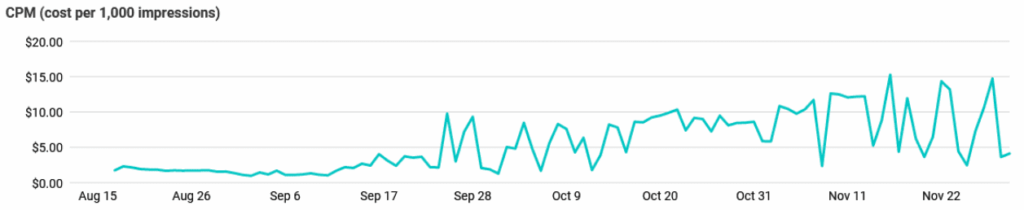
The following is a trend chart that shows what happened to the Cost Per Thousand (CPM – the cost for 1,000 impressions) when Advantage+ was disabled. A properly optimized ad should have a fairly steady Cost Per Action over time, not the fluctuations seen at the end of September when the optimizations were turned off.
Take a journey as our office transforms just in time for the most wonderful day of the year. We are ready to deck the halls, trim the trees, and close the office from Christmas until January 2nd!
From our office to yours, all of us at Central States Marketing wish you a Merry Christmas and are excited to see you again in the new year.
Influencer Marketing has been a buzzword for a while now, but what exactly is it all about?
This marketing strategy uses content creators to increase brand awareness, increase traffic, and market a company’s products or services. By combining the power of social media with the time-tested longevity of word-of-mouth marketing, influencer marketing is a hybrid of old and new marketing tools.
The campaigns are collaborations between brands/companies and influencers. Endorsements and product mentions from influencers are commonly utilized.
Let’s take a step back – what is an influencer?
An influencer is someone who has:
– the power to affect the purchasing decisions of others because of his or her authority, knowledge, position, or relationship with his or her audience
– a following in a distinct niche, with whom he or she actively engages. The size of the following depends on the size of his/her topic of the niche.
Influencers can be anyone, anywhere.
They’re influential because of their followings on social media and the web. There are influential people within every industry – you just have to find them. Some may have followings in the hundreds of thousands or millions. Some may have 10,000 followers or less. But the key is that they have developed a reputation for being experts in their field, and have a dedicated fanbase.
Social media is growing
Social media is growing – an estimated 4.9 billion people use social media globally as of 2023, and that number is expected to climb to 5.86 billion by 2027. Influencer marketing had a projected growth of 29% in 2023. It’s about demonstrating authority, credibility and thought leadership within your industry – it’s a slow-and-steady approach as opposed to a quick-results tactic. Influencers have spent time building their own brand and audience, so they’re naturally protective of their reputation.
Social media and influencer marketing is a direct line to Gen Z, a generation of diverse, socially conscious, and online-savvy consumers. A recent survey showed that 38% of Gen Z-ers spend more than 4 hours a day on social media apps.
Central States Marketing, in partnership with our strategic team and our diverse client base, recognizes the importance of staying informed about the dynamic ever evolving streaming landscape. With an ever-growing number of choices at hand for streaming and video placement, it can be overwhelming to determine the starting point. For each client, we develop and execute seamlessly integrated cross-channel campaigns with a unified narrative to maximize impact and measurable results.
Comscore, a renowned authority in media measurement and analytics, has recently provided invaluable insights into the continuously evolving streaming environment and changing consumer behaviors. We invite you to review some of their results below.
Substantial Increase in Online Video
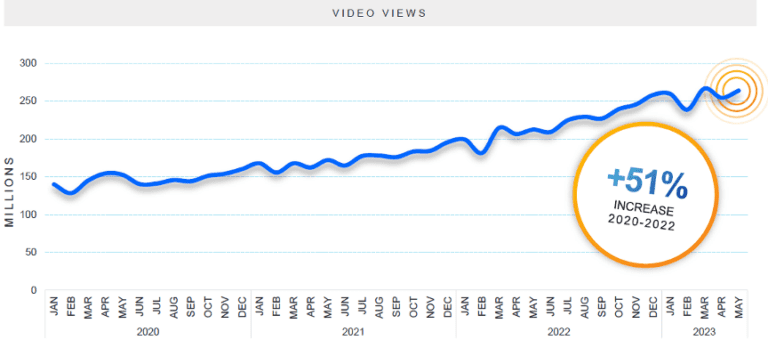
Digital platforms dominate entertainment consumption trends, and Online Video has seen a substantial increase from 2020 – 2022.
Adopting Ad-Supported Streaming
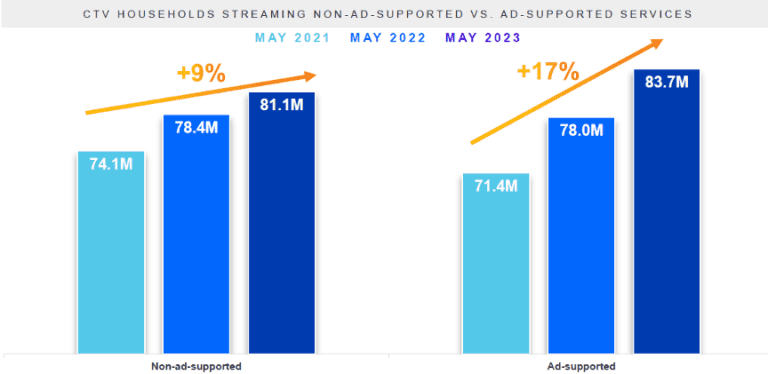
In good news for marketers, Americans are adopting ad-supported streaming services at a faster rate than non-ad subscription services.
Short-form Videos Surging
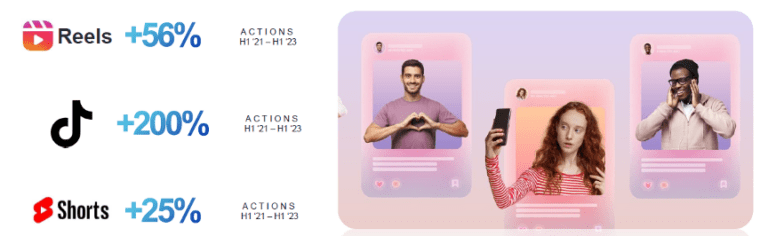
Short-form videos are surging amidst consumers, delivering concise and engaging content that captures attention in a short time span.
Audio Streaming is Growing
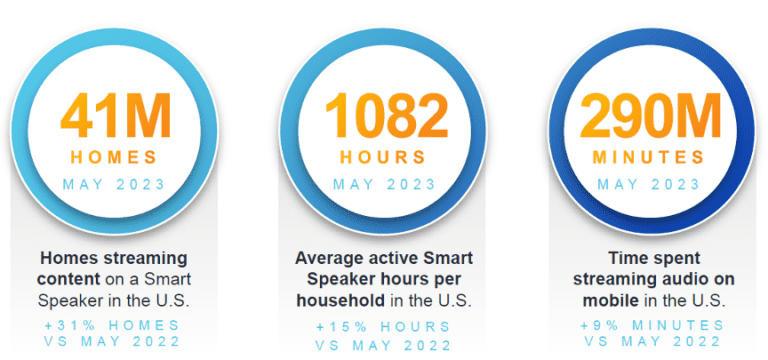
And it’s not just streaming video that’s rising – audio streaming is growing at a similar pace!
So what does this mean for you?
The optimal mix of platforms/tactics really depends on the target audience. Targeting users according to their behaviors also proves successful. Streaming offers businesses ways to expand reach and optimize outcomes.
Traditional TV Holding Its Ground
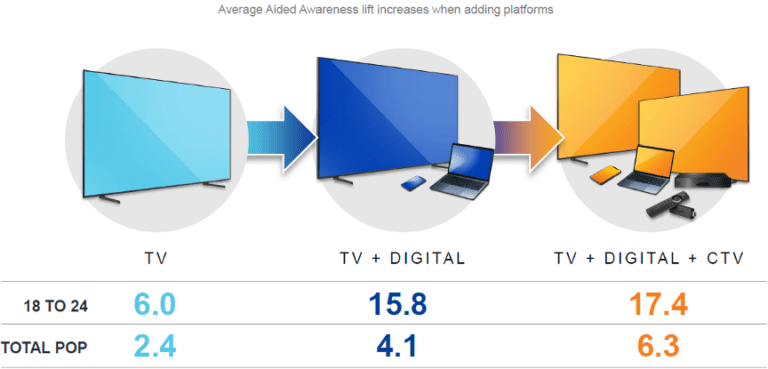
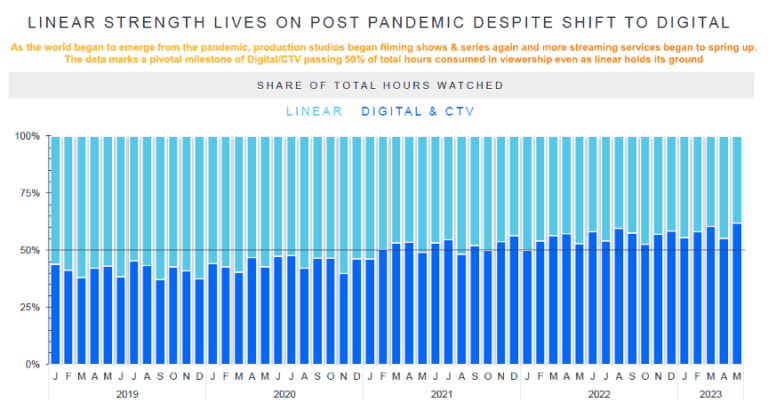
But even though more streaming services have sprung up and digital/CTV is passing 50% total hours of viewership, traditional (linear) TV is still holding its ground!
Traditional & Streaming Work Together
Think of traditional and digital/streaming media as two halves of the same coin – they can work together to strengthen your marketing and messaging.
TikTok Toggle
TikTok is one of the leading social platforms for user engagement, and they’re finding a way to take that even further by allowing it to work as if it were a search engine. A new search ads toggle became available at the beginning of September, providing ease of use as well as discoverability for advertisers.
How does the search toggle work? It begins when a user clicks the search button at the top of the “For You” feed. From there, they type in the search query (what they are hoping to find), which then brings a series of search results. An advertiser’s ad will appear among those search results.
The new search toggle uses the in-feed creative that advertisers are already running on the platform, serving users those ads when they search for something said ad may be relevant to. The simplicity of the offering – toggling the search capability on or off – make it an easy addition to the platform.
TikTok’s internal data shows that 70% of ad groups with the search ads toggle “on” experience a less expensive cost per action (CPA), due to more efficient conversions from the search ad placement. It’s a significant development for the platform and its advertising ecosystem, providing a new way to reach potential consumers.
Whether through paid or organic placement, TikTok is a great way to get your message seen by an engaged audience. We’d be happy to help you identify the best way to leverage TikTok or any other social media platform!
As of 2023, an estimated 4.9 billion people use social media across the world – and that number is expected to jump by approximately 20% by 2027! In the last three years, the online advertising world – especially social – has continued to change and diversify, providing more avenues for businesses to reach their target audience.
Back in 2018, an estimated 68% of U.S. adults used Facebook and 35% used Instagram. Both platforms, while still highly relevant, have seen a slight decline or slowing of social media users. Audiences have multiple different social media options. In fact, the typical social media user interacts with an average of 6.6 social media platforms and spends an average of 2 hours and 35 minutes on social media each day.
Generational Platform Trends
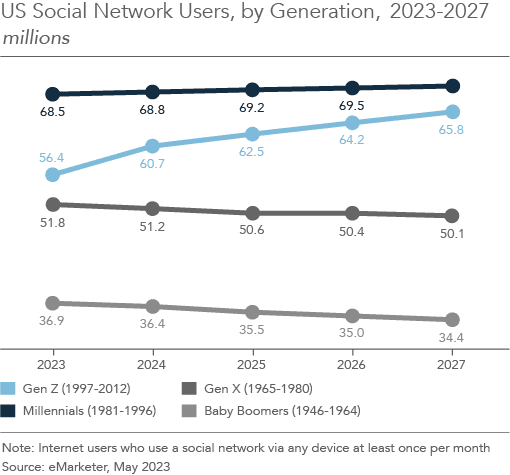
It’s no surprise that the largest audience for social growth is expected to come from Gen Z – those born between 1997-2012. Millennials (those born between 1981-1996) are expected to remain fairly consistent over the next few years, with a slight increase. By 2027, Gen Z and millennial social network users are expected to account for over half of the total social users in the United States.
TikTok, Snapchat and Instagram are the most popular social media platforms among this age group, although Snapchat tends to draw a higher share of Gen Z teens than Gen Z adults. Millennials dominate on Reddit (representing 40% of the user base) and are also present on TikTok (although not as much as Gen Z). Facebook and X (formerly Twitter) are both projected to lose millennial users this year.
Planning for Your Audience
As we start to look ahead to planning for 2024 and beyond, it’s best to look at things holistically. Depending on your target audience, it may be advantageous to split your social media budget among multiple platforms. Platforms like Reddit, Pinterest and LinkedIn have become bigger pieces of the advertising spend pie.
It’s also important to remember that traditional media still holds its place in this landscape as well. Millennials spend over 17% of their media time on traditional TV and listen to radio more than any other generation (including both broadcast and streaming radio). Gen Z spends over 10% of their time on traditional TV and 55% of them listen to the radio every day.
The beginning of July brought fireworks, hot dogs, the 4th of July……AND a new social media platform!
During the first week of July, Meta introduced Threads, a new platform for real-time conversations and sharing. Within the first 48 hours, it had surpassed 70 million signups. With similarities to Twitter – users in both apps can engage with the posts they see by liking, replying, and sharing – Meta has provided a familiar and easy-to-use alternative.
Threads currently does not offer advertising or monetization on the platform, but chances are that will change in the future. Since it does exist within the Meta ecosystem, if advertising does become available, it will likely be a relatively easy addition to existing social media strategies.
For small and medium sized businesses and social media teams, adopting something new doesn’t – and shouldn’t – happen overnight. If you’re curious about Threads, now is a perfect time to experiment and test out organic content. Everyone – including Meta – is figuring out Threads in real time.
While Threads isn’t offering advertising opportunities currently, there are a number of other proven social media platforms other than Facebook that may make sense for your business.
LinkedIn provides a way to engage on social media within the professional realm. The major advantage of LinkedIn marketing is that you can reach trustworthy professionals to drive actions relevant to your business and goals. Another advantage is the first-party data available just through someone’s profile. You can distinguish one’s job, position, what company and how long they’ve been employed, education, previous employers, skills, and who they are connected to. LinkedIn provides a vast number of targeting tactics such as company size, groups of interest, education, location and geography, and more that can further ensure that your dollars are being spent correctly.
People come to Twitter with a discovery mindset, so you can offer a lasting impression on those who are served your ads. The audience on Twitter is more likely to be passionate, engaged, and open to learning than those on other social media sites. People spend 25% more time viewing ads on Twitter than other leading platforms. Twitter has a vast and detailed process of providing you with the correct audience for your campaign. You can pinpoint based on demographics (location, language, platform, device, age, and gender). Then you can further split those groups into targeting based on event, tweet engage, keyword, movies, tv, interest, conversation, and more.
Pinterest is used by those who want something new, but don’t have an exact idea in mind. Advertising on this platform offers brand awareness, conversions, offline sales, and more traffic. It can be used as a visual search engine – which makes this platform a standout for retail, ensuring ads are relevant to what the pinners are searching for. Pinterest offers ways to find the perfect target audience for your business or campaign. They allow targets to be split based on demographics (age, gender, location, or language), interests, keywords, customer lists (reaching those who engage with your website, store or previous ads), and ‘actalike’s.’
While Reddit hasn’t always been recognized as part of the social media landscape, it’s gaining some traction in recent years. Second only to TikTok in terms of growth in 2021, Reddit is a diverse channel filled with interests that run the gamut of nearly every hobby, topic, or interest you could imagine. With over 3 million subreddits (collections of communities), Reddit can likely help you zero in on your target audience. While Reddit has fewer users than Facebook or Instagram, it makes up for it in user engagement. You can target by interest, communities, or custom audiences. An ideal audience size is approximately 1M users, so given the niche nature of the platform, it is not recommended to run campaigns at anything less than a state-wide geography.
Online reviews have become an essential tool for consumers who are deciding which businesses to support. With so many online platforms, the average person can share their experience in just a few clicks. There’s a lot you can learn from online reviews, and they can be a valuable tool for improving your customer service. Every review – both good and bad – can help affect your business, so it’s important to try to steer the narrative.
There’s no need to be intimidated: review response can be expertly handled if you understand a few key points. The first thing to note is that today’s consumers are savvy. They don’t want templated responses but instead prefer to feel like they are communicating with an actual person who really hears what they’re saying, and cares about it.
6 Things to Keep in Mind when Responding to Reviews
How can you accomplish a personal discourse? Here are six things to keep in mind when it comes to responding to reviews.
1. Know your customers.
It’s important to have a basic understanding of the types of people leaving reviews and the comments your company receives. One way to do this is to keep a log of your past reviews for reference. Notice repeat reviewers, and look for patterns in your reviews. Is there a particular complaint or department that’s popping up repeatedly from different customers? Make sure that one gets your full attention.
2. Categorize & Prioritize
Look at it as a kind of triage: categorize your reviews by sentiment, urgency, and so on. Remember that your reviewers are your customers, and what they’re saying is important to them or they wouldn’t have taken the time to write a review. Handle the most urgent issues first, but respond to all of your reviews within a pre-determined timeframe.
3. have a plan in place
Use the categorization to create an action plan that uses reviews to improve your business. Who should you notify? If the review is positive, does someone need to be commended? If it’s negative, you’ll likely need to let more people know, especially if it contains sensitive information or refers to specific employees. Sometimes the review will originate from an ex-employee, and you should have a plan for that possibility as well.
4. know the frame of reference
Make sure you have a list of ongoing replies and an FAQ document of some sort from your company before writing a reply. Before writing a reply, check out the reviewer, learning as much as you can about the person in order to understand his or her point of view. See if you can view their social profiles. Have we talked before? Have they used our product or services? Knowing a little bit more about the customer can help you evaluate whether your reply needs to be public or private.
5. offer a personal response
Here’s the crux of the matter: people want a personal connection with a human being. That’s why auto-response and templated responses do not work when it comes to reviews. Write a response that feels genuine, thanking them for taking the time to write the review and addressing any concerns they have in a supportive manner.
6. make sure your response is appropriate
Think about this: the response you give is not simply going to the reviewer but to the entire online community. People who are interested in your business, people who are already your customers, and even your competition could potentially read your response. That’s one reason to always remain cordial, even in the face of criticism. Another thing to consider? When the review is positive, craft your response to include your business name, location, and any applicable promotions. When it’s negative, avoid including that information, or any other words that could land a bad review in a search result for your business. Sometimes, a customer needs a heartfelt apology. Other times, a friendly emoji will suffice.